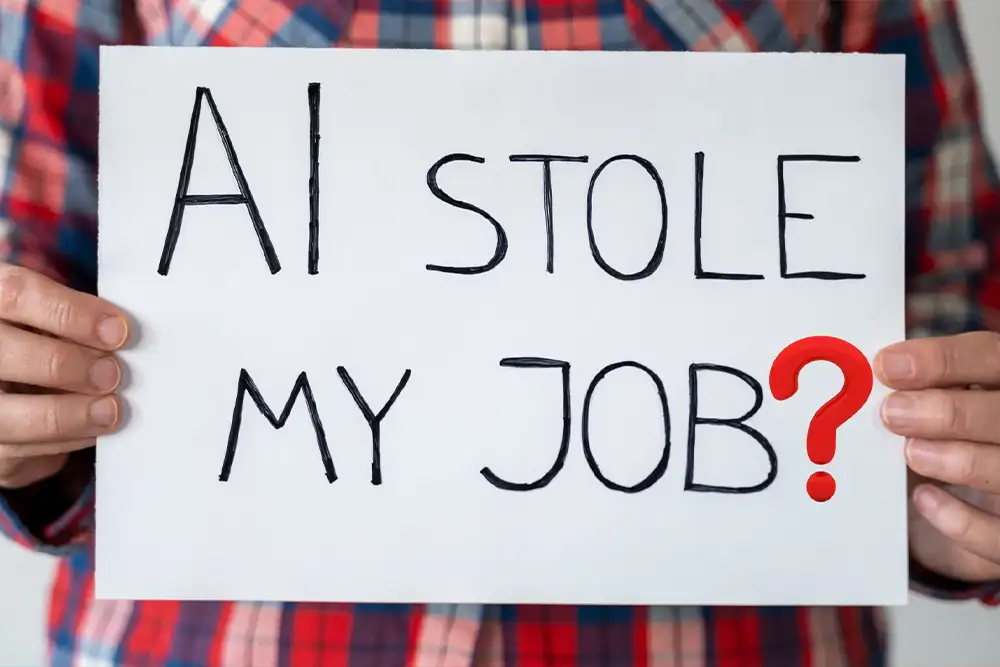
AI and Human Collaboration: The New Workplace Dynamic
As artificial intelligence (AI) continues to reshape the job market, a new paradigm is emerging: the collaboration between humans and AI. This synergy is creating a workplace dynamic that leverages the strengths of both human intelligence and machine learning capabilities. Understanding and adapting to this new reality is crucial for workers and organizations aiming to thrive in the AI era
The concept of AI-human collaboration is based on the idea that AI can augment human capabilities rather than simply replace them. In this model, AI takes on tasks that it excels at – such as processing vast amounts of data, identifying patterns, and performing repetitive operations – while humans focus on areas where they have a comparative advantage, including creative thinking, emotional intelligence, and complex decision-making.
This collaborative approach is already transforming various industries:
- Healthcare: AI algorithms assist doctors in analyzing medical images and patient data, leading to more accurate diagnoses and personalized treatment plans. However, the final decisions and patient interactions remain in the hands of human healthcare professionals.
- Finance: AI-powered systems help financial analysts process market data and identify investment opportunities, but human experts are still essential for interpreting results and making strategic decisions.
- Customer Service: While chatbots handle routine inquiries, human agents focus on complex issues that require empathy and nuanced communication.
- Creative Industries: AI tools assist in generating ideas and streamlining production processes, but human creativity remains central to producing unique and emotionally resonant content.
The key to successful AI-human collaboration lies in developing a workforce that can effectively work alongside AI systems. This requires a shift in mindset and skill set. Workers need to understand AI’s capabilities and limitations, learn how to interact with AI tools, and focus on developing skills that complement AI rather than compete with it.
Organizations play a crucial role in fostering this collaboration. They need to:
- Invest in AI literacy programs for employees
- Redesign workflows to integrate AI seamlessly
- Encourage a culture of continuous learning and adaptation
- Emphasize the development of uniquely human skills
As AI continues to evolve, the nature of this collaboration will likely change. Future AI systems may become more advanced in areas currently dominated by humans, such as creative tasks or emotional intelligence. This ongoing evolution underscores the importance of remaining adaptable and continuously updating skills.
The AI-human collaboration model offers a promising vision for the future of work. By embracing this approach, workers can enhance their productivity and job security, while organizations can achieve higher levels of innovation and efficiency. As we move forward, the most successful individuals and companies will be those that can effectively harness the power of AI while leveraging uniquely human capabilities.