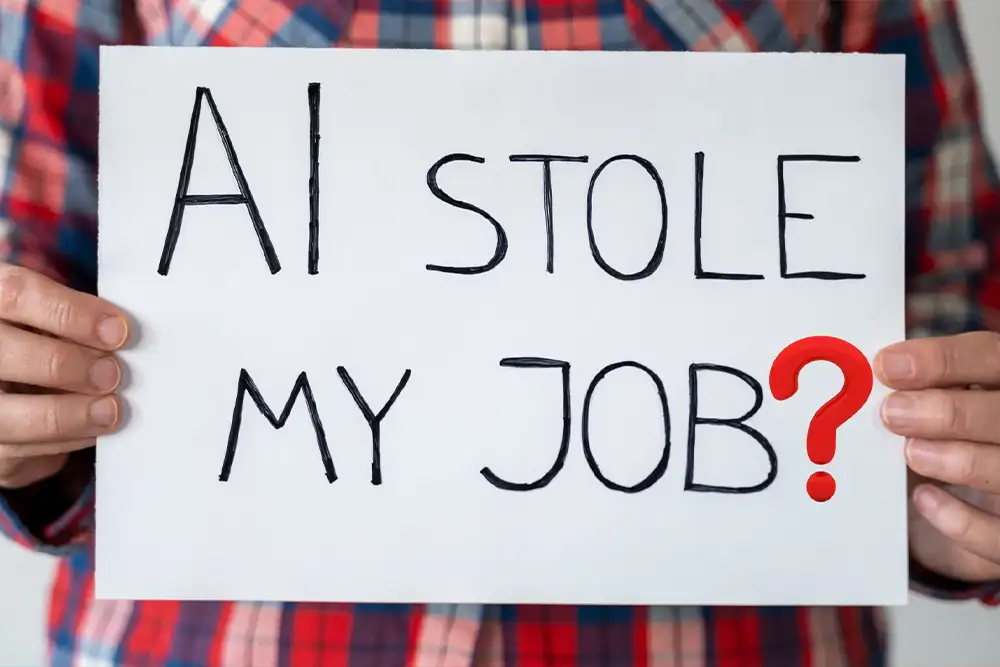
The Socioeconomic Impact of AI on Employment
The integration of artificial intelligence (AI) into the workforce is not just a technological shift; it’s a socioeconomic transformation that is reshaping the very fabric of our society. Understanding the broader implications of this change is crucial for policymakers, business leaders, and individuals alike.
Economic Impact:
- Job Displacement and Creation:
While AI is expected to automate many jobs, it’s also creating new roles. A report by the World Economic Forum predicts that by 2026, 85 million jobs may be displaced by the shift in labor division between humans and machines, while 97 million new roles may emerge. This net positive job creation, however, doesn’t negate the significant disruption to the labor market. - Productivity Gains:
AI has the potential to significantly boost productivity across various sectors. For instance, in manufacturing, AI-powered robots can work 24/7 without fatigue, potentially increasing output. In knowledge-based industries, AI can automate routine tasks, allowing workers to focus on higher-value activities. - Economic Inequality:
There’s a risk that AI could exacerbate economic inequality. Those with the skills to work with AI may see their incomes rise, while those in automated jobs may face unemployment or wage stagnation. This “skill-biased technological change” could widen the gap between high-skilled and low-skilled workers. - Industry Disruption:
AI is reshaping entire industries. For example, the rise of autonomous vehicles could disrupt transportation and logistics, while AI-powered diagnostic tools are transforming healthcare. These changes can lead to the decline of some industries and the rapid growth of others.
Social Impact:
- Education and Skills:
The AI revolution is highlighting the need for education systems to adapt. There’s an increasing emphasis on STEM education, critical thinking, and creativity – skills that complement rather than compete with AI. - Work-Life Balance:
AI automation could potentially lead to reduced working hours, allowing for better work-life balance. However, it could also blur the lines between work and personal time as AI systems enable 24/7 productivity. - Job Satisfaction and Mental Health:
As AI takes over routine tasks, human workers may find their roles becoming more creative and strategic, potentially increasing job satisfaction. However, the pressure to continuously upskill and adapt to AI could also lead to increased stress and anxiety. - Social Mobility:
AI could either enhance or hinder social mobility. On one hand, AI-powered educational tools could democratize access to high-quality education. On the other, if access to AI skills becomes a key determinant of economic success, it could create new barriers to social mobility. - Demographic Shifts:
AI could impact different demographic groups differently. For instance, older workers might find it more challenging to adapt to AI technologies, potentially leading to increased early retirement. This could have implications for pension systems and healthcare.
Policy Implications:
- Education and Training:
Governments need to invest in education and training programs that prepare the workforce for the AI era. This includes both reskilling programs for displaced workers and updating school curricula to include AI literacy. - Social Safety Nets:
As job displacement due to AI may lead to periods of unemployment for many workers, robust social safety nets and unemployment benefits will be crucial. - AI Governance:
Policymakers need to develop frameworks for the ethical development and deployment of AI, addressing issues like bias in AI systems and the impact of AI on privacy. - Labor Laws:
As AI changes the nature of work, labor laws may need to be updated to protect workers’ rights in the new AI-driven workplace. - Economic Policies:
Governments may need to consider policies to address potential increases in economic inequality, such as universal basic income or progressive taxation of AI-driven profits.
Ethical Considerations:
- Algorithmic Bias:
AI systems can perpetuate and amplify existing biases in hiring, lending, and other areas if not carefully designed and monitored. - Privacy Concerns:
The increasing use of AI in the workplace raises questions about employee privacy and data protection. - Human Value:
As AI becomes more capable, there’s a philosophical question about the value and dignity of human work. Ensuring that AI augments rather than replaces human capabilities will be a key ethical challenge. - Global Impact: The impact of AI on employment will not be uniform across the globe.
Developed countries with aging populations might welcome AI as a solution to labor shortages, while developing countries with young, growing populations might face challenges in creating enough jobs.
Moreover, countries and regions that lead in AI development and adoption may gain significant economic advantages, potentially reshaping global economic power dynamics.
In conclusion, the socioeconomic impact of AI on employment is profound and multifaceted. While AI promises significant economic benefits through increased productivity and innovation, it also poses challenges in terms of job displacement and potential increases in inequality.
Navigating this transformation will require thoughtful policies, adaptive education systems, and a commitment to ensuring that the benefits of AI are broadly shared across society. As we move forward, it will be crucial to harness the potential of AI while mitigating its risks, ensuring that technological progress translates into social progress for all.