


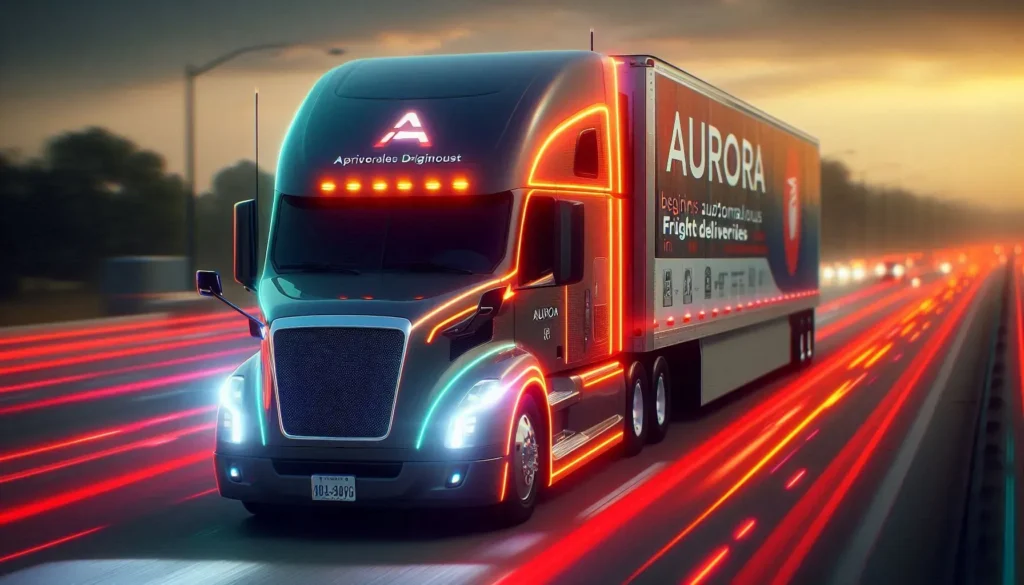
First Driverless Semi Truck Launches in Texas: Aurora Begins Autonomous Freight Deliveries
Aurora Launches the First Driverless Semi Truck in Texas
In May 2025, Aurora Innovation, Inc. became the first company to launch a fully driverless commercial semi truck service in the United States. Their autonomous 18-wheelers now regularly haul freight between Dallas and Houston, operating entirely without a human driver in the cab. This milestone follows over four years of rigorous testing, including more than 1,200 miles of driverless operation and over three million autonomous miles during supervised pilot programs.
“We founded Aurora to deliver the benefits of self-driving technology safely, quickly, and broadly. Now, we are the first company to successfully and safely operate a commercial driverless trucking service on public roads,” said Chris Urmson, CEO and co-founder of Aurora.
With plans to expand routes to El Paso, Texas and Phoenix, Arizona by the end of 2025, Aurora is setting the pace for the next generation of logistics and transportation.
Texas Governor Greg Abbott praised the launch, highlighting Texas’ leadership in technology and innovation, and noting that these autonomous trucks will efficiently move products, create jobs, and help make roadways safer.
The Technology Behind the Aurora Driver
The heart of Aurora’s breakthrough is the Aurora Driver, an SAE Level 4 self-driving system. This advanced platform integrates a powerful onboard computer and an array of sensors capable of seeing beyond the length of four football fields. The system’s AI can predict red light runners, avoid collisions, and even detect pedestrians in the dark at great distances.
Aurora’s trucks are equipped with redundant braking, steering, and power systems, and their Driverless Safety Report details the company’s approach to cybersecurity and remote assistance. These innovations have enabled Aurora to deliver over 10,000 customer loads, including time- and temperature-sensitive cargo for partners like Uber Freight and Hirschbach Motor Lines.
Aurora’s proprietary FirstLight lidar allows the system to spot and react to pedestrians up to 11 seconds sooner than human drivers at highway speeds at night, setting a new standard for safety and reliability.
Impact on Freight, Logistics, and the Economy
The launch of driverless semis is a game-changer for the freight industry, which has long struggled with driver shortages, high turnover, and rising operational costs. Autonomous trucks can operate around the clock, increasing utilization rates and reducing delivery times.
According to Texas Governor Greg Abbott, these trucks will “efficiently move products, create jobs, and help make our roadways safer.”
Backed by major industry partners, Aurora’s technology promises to spur economic growth, create new types of jobs in tech and logistics, and make supply chains more resilient. The company’s expansion across Texas and plans for additional routes in the Southwest signal a new era for American logistics.
The Future of Driverless Highways
The arrival of driverless trucks is just the beginning. Experts predict that by 2030, nearly a quarter of all miles driven in the US could be from shared self-driving vehicles. As highways become populated with autonomous trucks, traffic flow is expected to become smoother and safer, with vehicles communicating seamlessly to avoid accidents and congestion.
Roadway design will likely evolve: narrower lanes, fewer signs, and more efficient use of space as vehicles rely on sensors and interconnectivity rather than human cues. This could free up urban space for pedestrians and cyclists, fundamentally changing the landscape of American highways and cities.
The Infrastructure Investment and Jobs Act is investing in smart highways and dedicated testing facilities, supporting the growth of autonomous trucking and addressing challenges such as safety, liability, and public perception.
Smart Cities and Infrastructure: What’s Next?
The integration of autonomous vehicles is a cornerstone of smart city evolution. In 2025, urban planners are prioritizing health, sustainability, and efficiency by leveraging AI for traffic management, resource allocation, and infrastructure planning. Digital twins-virtual replicas of city systems-allow for real-time monitoring and predictive analysis, optimizing everything from energy use to traffic flow.
Cities like Singapore and Helsinki are pioneering digital twin technology to simulate and optimize transportation networks, energy usage, and public services.
As electric and autonomous vehicles proliferate, cities are expanding charging networks and integrating them with smart grids. Technologies like blockchain and IoT are enhancing data security, transparency, and citizen engagement, making urban environments more resilient and responsive.
Green mobility initiatives and the expansion of charging infrastructure are key to supporting the growth of autonomous and electric fleets, ensuring cities are ready for the next wave of transportation innovation.
Aurora vs. Global Leaders in Autonomous Vehicles
Aurora’s commercial launch of driverless semi trucks in Texas positions it as a front-runner in the global autonomous vehicle (AV) industry. However, the landscape is fiercely competitive, with several major players advancing rapidly in both technology and deployment.
Waymo
Waymo, an Alphabet subsidiary, is a pioneer in autonomous driving and is expanding its robotaxi services to new cities like Miami in 2025. Waymo is also collaborating with Toyota to develop next-generation autonomous vehicle platforms, combining Waymo’s software expertise with Toyota’s manufacturing scale and safety systems.
Toyota and Waymo Partnership
Tesla
Tesla continues to push its Full Self-Driving (FSD) technology, with plans to launch its “Cybercab” robotaxi and expand paid ride services in 2025. Tesla’s approach focuses on mass-market passenger vehicles and leverages its vast fleet data to iterate on its FSD software.
Kodiak Robotics
Kodiak Robotics is another US-based leader, recently delivering the first customer-owned driverless RoboTruck fleet and completing fully autonomous deliveries in West Texas. Kodiak’s technology is also being adapted for defense and port logistics applications.
Pony.ai
Pony.ai focuses on Level 4 robo-taxis, operating large test fleets in China and California. The company is aiming for commercial passenger mobility in geofenced urban areas, and its valuation reflects high expectations if regulatory and technical milestones are met.
TuSimple
TuSimple was a major player in US autonomous trucking but has shifted focus to China after closing its US business. The company is known for its early advances in autonomous long-haul trucking.
Gatik
Gatik specializes in autonomous box trucks for short-haul, middle-mile logistics, notably operating for Walmart in Arkansas. Gatik’s real-world deployments provide valuable operational data and regulatory insights.
Comparative Perspective
While Aurora leads in commercial driverless freight in the US, other companies excel in different domains-Waymo in urban robotaxis, Tesla in consumer vehicles, and Kodiak in customer-owned autonomous fleets. The field remains dynamic, with partnerships (such as Toyota-Waymo and Aurora-NVIDIA) accelerating innovation and deployment worldwide.
Global Policy and Regulation
The global growth of autonomous trucking is shaped by varying regulations and policies across the US, Europe, and China. The US leads in testing and deployment, but the absence of unified federal policy creates a fragmented landscape. Industry leaders are calling for national legislation to streamline cross-state operations, while the Infrastructure Investment and Jobs Act is investing in smart highways and dedicated testing facilities.
Innovation in Charging and Maintenance
Companies like Rocsys are developing hands-free charging solutions for autonomous trucks, eliminating the need for human attendants and streamlining operations for large fleets.
The US Smart Grid and Autonomous Trucking
The integration of autonomous trucks with the US smart grid is accelerating, driven by the need for efficient, sustainable freight movement. The smart grid’s network of sensors, AI, and renewable energy sources is crucial for supporting the electrification and real-time operation of autonomous fleets.
The National Renewable Energy Laboratory (NREL) is evaluating the impacts and opportunities of integrating electric vehicle (EV) charging with the grid, focusing on high-power charging for heavy-duty trucks and strategies to minimize grid integration costs while improving resilience and reliability.
Companies like Aurora and Kodiak Robotics are leveraging AI to optimize routes and charging schedules, reducing energy consumption and operational costs. Integration with the smart grid allows trucks to charge during periods of low demand, balancing the load and supporting grid stability.
AI-Driven Route Optimization and Charging
Advanced AI systems enable autonomous trucks to optimize their routes and charging times, minimizing energy use and operational costs. This synergy is crucial for sustainability: autonomous trucks can minimize fuel consumption through optimized driving patterns, and smart grids can ensure that increased energy demands are met with renewable sources, reducing the carbon footprint of freight transport.
Partnerships with Energy and Tech Leaders
NVIDIA’s DRIVE platform is powering next-generation autonomous vehicles for Toyota, Aurora, and Continental, enabling advanced energy management and predictive maintenance. These collaborations are expected to scale up as more electric and autonomous trucks hit the road.
Smart Grid Expansion for Freight Corridors
As autonomous freight corridors expand-especially in Texas, Arizona, and California-utilities and tech firms are investing in grid upgrades, fast-charging stations, and renewable energy integration. This infrastructure is vital for supporting the 24/7 operation of driverless fleets and reducing the carbon footprint of logistics.
Challenges and Opportunities
Integrating autonomous vehicles with the smart grid presents challenges such as high-power load management, cybersecurity, and the need for standardized communication protocols between vehicles and grid systems. However, the opportunities are immense: improved grid resilience, lower emissions, and the potential for vehicle-to-grid (V2G) services where trucks can supply power back to the grid during peak demand.
Predicted Timeline for Driverless Highways
The path to widespread driverless highways is unfolding in phases, with 2025 marking the commercial launch of services like Aurora’s in Texas. Here’s how experts see the timeline progressing:
2025–2027: Commercial Pilots and Hub-to-Hub Operations
During this period, most deployments will focus on hub-to-hub freight corridors and controlled urban environments. Companies such as Aurora, Kodiak Robotics, and Gatik are scaling up operations, while regulatory frameworks are being refined at the state and federal levels.
2028–2030: Expansion and Mixed Traffic
By the late 2020s, autonomous trucks are expected to operate on more routes, including night driving and adverse weather. Passenger AVs from Waymo, Tesla, and Pony.ai will expand into new cities, and mixed traffic (human and autonomous vehicles) will become commonplace.
2030 and Beyond: Dedicated Driverless Highways
Dedicated lanes or entire highways for autonomous vehicles may emerge, especially for freight. Urban planning will adapt to accommodate AVs, with smart infrastructure and digital twins enabling real-time traffic management and predictive maintenance.
Role of Regulation and Public Perception
Regulatory frameworks, public acceptance, and continued technological advancements will shape the pace of this transition. The absence of unified federal policy in the US creates a fragmented landscape, but recent legislation is addressing some challenges. Public trust and education will be crucial for widespread adoption.
Infrastructure Investment and Testing
The Infrastructure Investment and Jobs Act is investing in smart highways and dedicated testing facilities, supporting the growth of autonomous trucking and addressing challenges such as safety, liability, and public perception.
Challenges and Opportunities Ahead
Despite the promise, challenges remain. Regulatory hurdles, cybersecurity concerns, and public trust must be addressed. Ensuring the safety of mixed traffic-autonomous and human-driven vehicles-will require robust standards and ongoing oversight.
Yet, the opportunities are immense: reduced accidents, lower emissions, increased economic efficiency, and new jobs in tech, logistics, and infrastructure. As Aurora and its peers continue to innovate, the US is poised to lead the world in autonomous freight and smart city development.
Conclusion: The Road Ahead
Aurora’s driverless semi truck launch in Texas is more than a technological triumph-it’s a glimpse into the future of transportation, logistics, and urban living. As smart highways and cities evolve, the benefits of autonomous freight will ripple across the economy and society, reshaping how we move goods, design our roads, and build our communities.
The journey has just begun, and the road ahead promises to be both transformative and exciting.
References
- Aurora Begins Commercial Driverless Trucking in Texas, Ushering in a New Era of Freight. Logistics Viewpoints. 2025.
- First driverless semi trucks have started running regular routes in Texas, company says. KPAX. 2025.
- The first driverless semis have started running regular longhaul routes. CNN. 2025.
- End Of The Beginning: Aurora Launches Commercial Driverless Trucks. Forbes. 2025.
- Aurora’s driverless trucks are making deliveries in Texas. The Verge. 2025.
- Aurora launches commercial self-driving truck service in Texas. TechCrunch. 2025.
- Grid-Transportation Integrated Energy Systems. NREL. 2025.
- Aurora: Self-driving freight is here. Aurora Tech. 2025.
- How autonomous trucks are revolutionising global logistics. Innovation News Network. 2024.
- With a load of pastries, Aurora hits driverless truck milestone in Texas. Axios. 2025.
- Electrified autonomous freight benefit analysis on fleet, infrastructure and environment. ScienceDirect. 2023.
- Hands-Free Charging for Autonomous Trucks. Rocsys. 2025.
- Challenges and Opportunities of Grid Modernization and Electric Transportation. US Department of Energy. 2025.
- Towards the Integration of Sustainable Transportation and Smart Grids. MDPI. 2022.
- Advanced Mobility and Grid Integration Technology Research. Argonne National Laboratory.