Table of Contents
- What Is a Domain Name?
- Understanding Domain Extensions (TLDs)
- Best Practices for Choosing a Domain Name
- 1. Know Your Audience & Avoid Copyright Issues
- 2. Use Your Brand or Niche Keywords
- 3. Descriptive Product or Service Domains
- 4. Why “.com” Is Still King
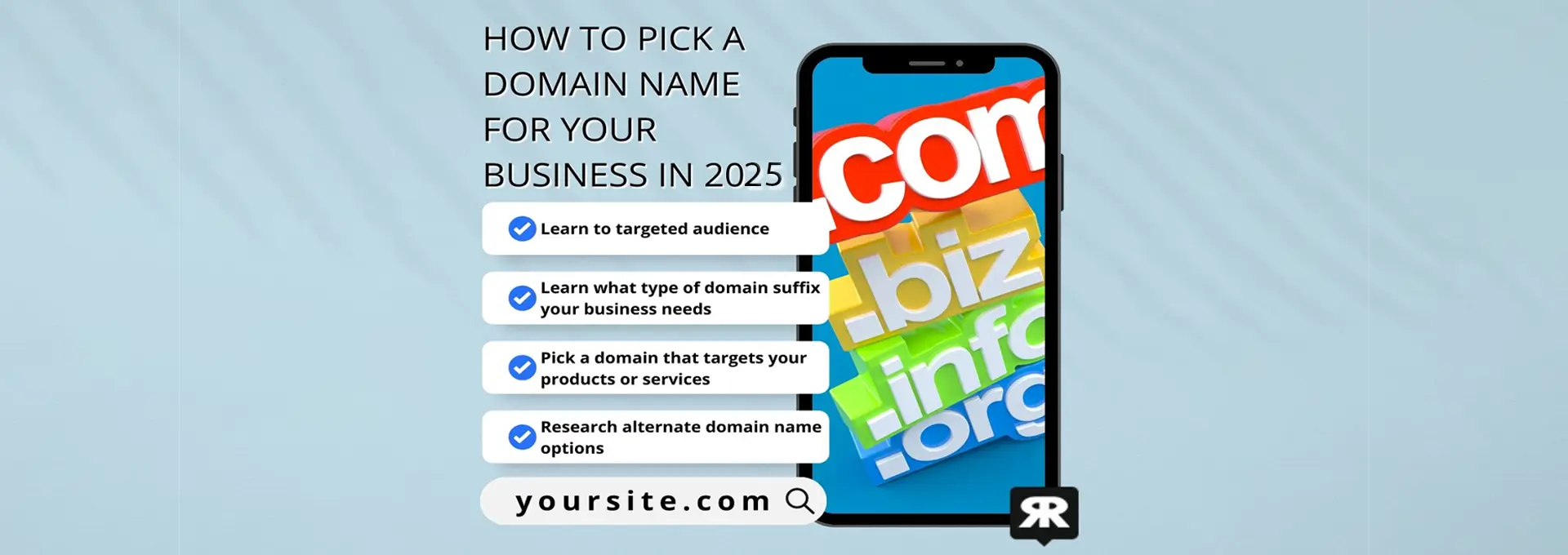
- 5. Choosing the Right Suffix for Your Business
- 6. Researching Alternative Domain Options
- 7. Register Brand & Product Domains
- 8. Plan for Typos & Misspellings
- SEO Strategies for Domain Names
- Branding & Memorability Tips
- Choosing a Domain Registrar
- After You Buy: Next Steps
- Advanced Research & Trends in 2026
- Conclusion
- References
What Is a Domain Name?
A domain name is your unique address on the internet, the part you type after “www.” and before the extension (like .com or .org). For example, in “rodrice.org,” “rodrice” is the domain name and “.org” is the extension. Your domain is how customers find your website and is a core part of your online identity. When you purchase a domain, you are buying the right to use that address for a set period, usually a year or more. For a detailed introduction, see WPBeginner’s guide.
Understanding Domain Extensions (TLDs)
The domain extension, also known as the suffix or top-level domain (TLD), is the last part of your web address. Common TLDs include .com, .net, and .org, but there are now hundreds of options, from country codes (.ca, .uk) to industry-specific extensions (.store, .ai, .cafe). For more on TLDs, check WebsiteSetup’s tips.
- Country-code TLDs (ccTLDs): Indicate a specific country, such as .ca for Canada or .uk for the United Kingdom.
- Generic TLDs (gTLDs): Include .com, .net, .org, and many newer options like .blog or .shop.
Choosing the right extension depends on your audience and business goals. .com remains the most recognized and trusted, but other TLDs can help you stand out or target a specific region or industry. For a deeper dive, see Shopify’s domain guide.
Best Practices for Choosing a Domain Name
1. Know Your Audience & Avoid Copyright Issues
In a global marketplace, your domain could reach customers worldwide. Before registering, search for similar names across a broad area to avoid trademark infringement and legal complications. Make sure your domain is distinct from competitors and does not violate any existing trademarks. Use resources like SCORE’s guide and Shopify’s trademark search tips for more.
2. Use Your Brand or Niche Keywords
Ideally, your domain should closely match your business name or core products/services. This makes it easier for customers to find you and reinforces your brand identity. If possible, incorporate relevant keywords that describe your niche, but keep them natural and not forced.
- Example: If your business is “Foster Juice Co,” a domain like fosterjuiceco.com is clear and brand-focused.
3. Descriptive Product or Service Domains
Sometimes, using a domain that describes your product or service can attract new customers who are searching for what you offer. For example, “floor-buffing.com” clearly indicates the service provided, which can help with search visibility and customer clarity.
4. Why “.com” Is Still King
The “.com” extension remains the most popular and trusted TLD. If you want to maximize your reach and credibility, always try to secure the .com version of your domain. If it’s unavailable, consider alternatives like .net or .co, but be aware that .com is often the first thing users will try. For statistics and reasoning.
5. Choosing the Right Suffix for Your Business
Select a TLD that aligns with your business type:
- .com: Best for commercial or personal sites.
- .net: Good for tech or infrastructure companies.
- .org: Ideal for nonprofits.
- Industry/Location-specific TLDs: Use .cafe, .music, .ai, etc., if relevant to your niche.
Keep your entire domain (including the TLD) under 26 characters for compatibility and ease of use. For more, see SCORE.
6. Researching Alternative Domain Options
If your preferred domain is taken, don’t be discouraged. Use domain search tools to find available alternatives, try creative combinations, or consider different TLDs. AI-powered generators can help brainstorm unique names based on your keywords and brand attributes. re great starting points.
7. Register Brand & Product Domains
Protect your brand by registering both your main brand name and key product or service domains. This prevents competitors from acquiring similar domains and helps you “corner the market.” For example, own both yourbrand.com and yourproduct.com if possible.
8. Plan for Typos & Misspellings
Think like your customers: what mistakes might they make when typing your domain? If your name is commonly misspelled, consider registering those variations as well and redirecting them to your main site. This ensures you capture as much traffic as possible and avoid losing visitors to simple errors.omain Names
Your domain name can influence your site’s search engine optimization (SEO), but the rules have evolved. Here are key points for 2026:
- Keep it short and simple: Research shows domains with 6-12 characters are most memorable and perform best in organic search. See WebsiteSetup and SCORE for more.
- Use relevant keywords (sparingly): Keywords can help, but avoid awkward or spammy combinations. Focus on clarity and brandability.
- Avoid numbers, hyphens, and special characters: These complicate your domain and can reduce trust and memorability.
- Choose a trustworthy TLD: .com is the most trusted, but .co, .net, and .org are also respected. Newer TLDs can work if they fit your brand.
- Check the domain’s history: If buying a pre-owned domain, use tools like the Wayback Machine to ensure it hasn’t been penalized or used for spam.
- Prioritize brandability over exact-match keywords: Modern SEO values unique, memorable brands more than keyword-heavy domains.
“Shorter domains consistently outperform longer ones in both memorability and traffic. Each additional character beyond 6-7 measurably decreases performance.”
Branding & Memorability Tips
- Make it unique: Stand out from competitors and avoid generic terms.
- Easy to pronounce and spell: If people can’t say or spell your domain, they’re less likely to remember or share it.
- Keep it under 15 characters: Shorter domains are easier to type, remember, and share. See SCORE.
- Test with real people: Run your top choices by friends, colleagues, or focus groups to gauge first impressions and recall.
- Consider future growth: Avoid names that might limit your business if you expand your offerings.
A branded domain not only looks professional but also builds loyalty and trust. Consistent use of your domain across web, email, and marketing reinforces your brand identity.
Choosing a Domain Registrar
A domain registrar is a company authorized to sell and manage domain names. Popular registrars include GoDaddy, NameCheap, IONOS, Domain.com, Squarespace, HostGator, and DreamHost. Compare pricing, support, and features before choosing. Always use a reputable registrar to avoid issues with ownership and renewals.
After You Buy: Next Steps
- Purchase web hosting: Choose a hosting plan that fits your site’s needs. Shared hosting is affordable for small sites; VPS or dedicated hosting is better for large or e-commerce sites.
- Connect your domain to your hosting: Follow your registrar’s instructions to point your domain to your new website.
- Set up email addresses: Use your domain for professional email (e.g., info@yourdomain.com).
- Secure your domain: Enable auto-renewal and consider domain privacy protection to keep your information safe.
For a step-by-step setup, see WPBeginner.
Advanced Research & Trends in 2026
- AI-powered domain generators: These tools can suggest creative, available names based on your keywords and desired brand attributes. Use them for inspiration, but review suggestions carefully for cultural or linguistic issues.
- Brandable vs. keyword domains: The trend in 2026 is toward unique, brandable domains rather than exact-match keywords. This improves memorability and long-term value.
- Domain authority matters: Search engines now prioritize site reputation, quality content, and backlinks over domain keywords alone.
- Local and niche TLDs: If you serve a specific region or industry, consider a relevant TLD (.nyc, .law, .shop) to signal your focus.
- Domain flipping and investment: Some domains have value as digital real estate. Assess broad and niche appeal, development potential, and market trends before investing. For more, see RodRice.org’s domain flipping guide.
| Domain Feature | Best Practice | Why It Matters |
|---|---|---|
| Length | 6-12 characters | Shorter is more memorable and less prone to typos |
| Keywords | Relevant, not forced | Helps with clarity and SEO, but avoid spammy combinations |
| TLD | .com preferred | Most trusted and recognized by users |
| Brandability | Unique, easy to say/spell | Builds trust and aids marketing |
| Registrar | Reputable, transparent pricing | Ensures domain security and easy management |
Conclusion
Choosing the right domain name is one of the most important steps in launching your online presence. A great domain increases your brand’s visibility, credibility, and ease of discovery. In 2026, focus on short, memorable, and brandable names, prioritize .com when possible, and use domain research tools to find the best fit. Register your domain with a trusted registrar and plan for your business’s growth and future needs. Your domain is more than just an address-it’s the foundation of your digital brand.