Why Kroger robot warehouses failed: The company’s big bet on robot-powered grocery warehouses was supposed to redefine online shopping in America.
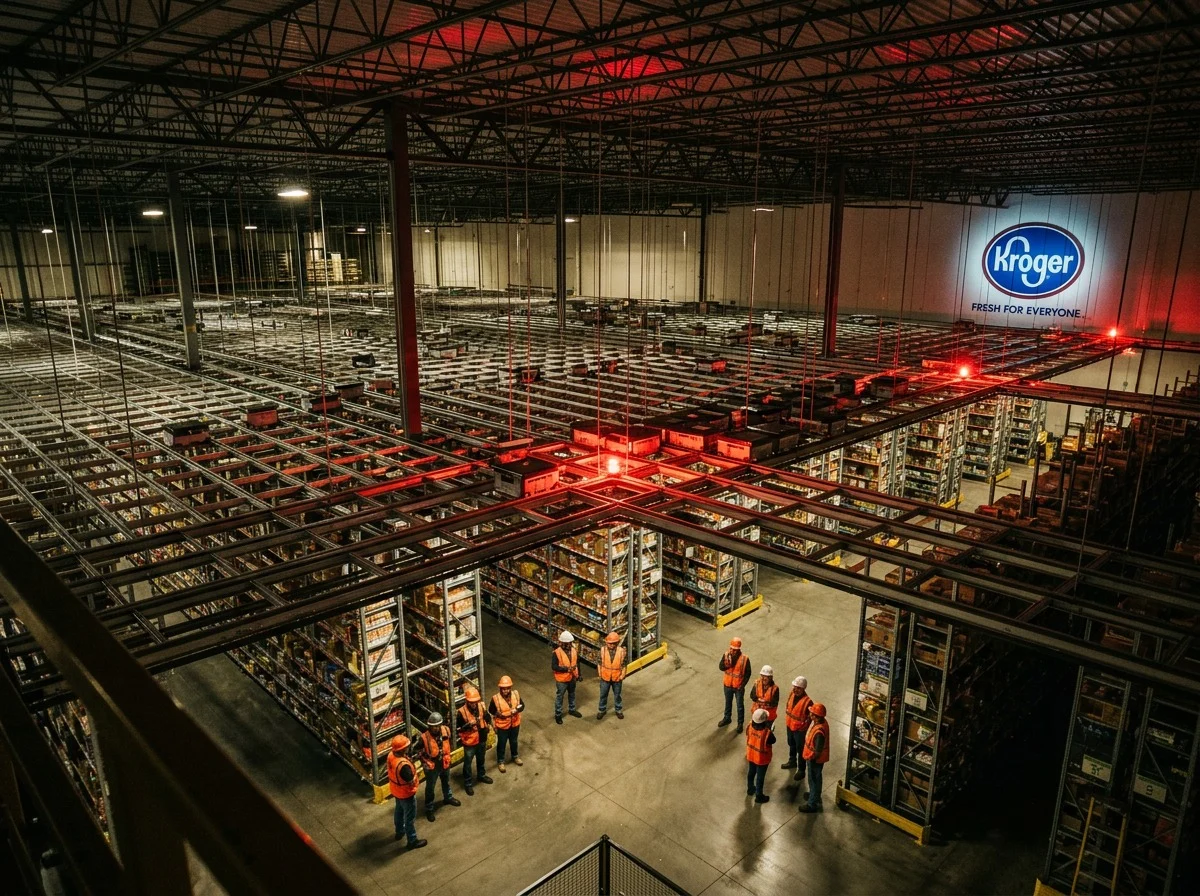
In late 2025, Kroger announced plans to shut down three Ocado-powered Customer Fulfillment Centers in Pleasant Prairie, Wisconsin; Frederick, Maryland; and Groveland, Florida. The closures, scheduled to begin in early 2026, come with impairment and related charges of roughly $2.6 billion tied to facilities that never lived up to their financial and operational promises.
This is a stunning reversal for a partnership that once symbolized the future of grocery delivery. Back in 2018, Kroger teamed up with U.K.-based Ocado to build a national network of highly automated “hive” warehouses. The pitch was simple and seductive: let swarms of robots pick thousands of items per hour inside centralized facilities, then ship orders quickly and efficiently to customers’ doors. In theory, this model would unlock profitable e-commerce at scale in an industry famous for razor-thin margins.
How Kroger’s $2.6 Billion Robot Bet Was Supposed to Work
The Ocado “Smart Platform” Vision
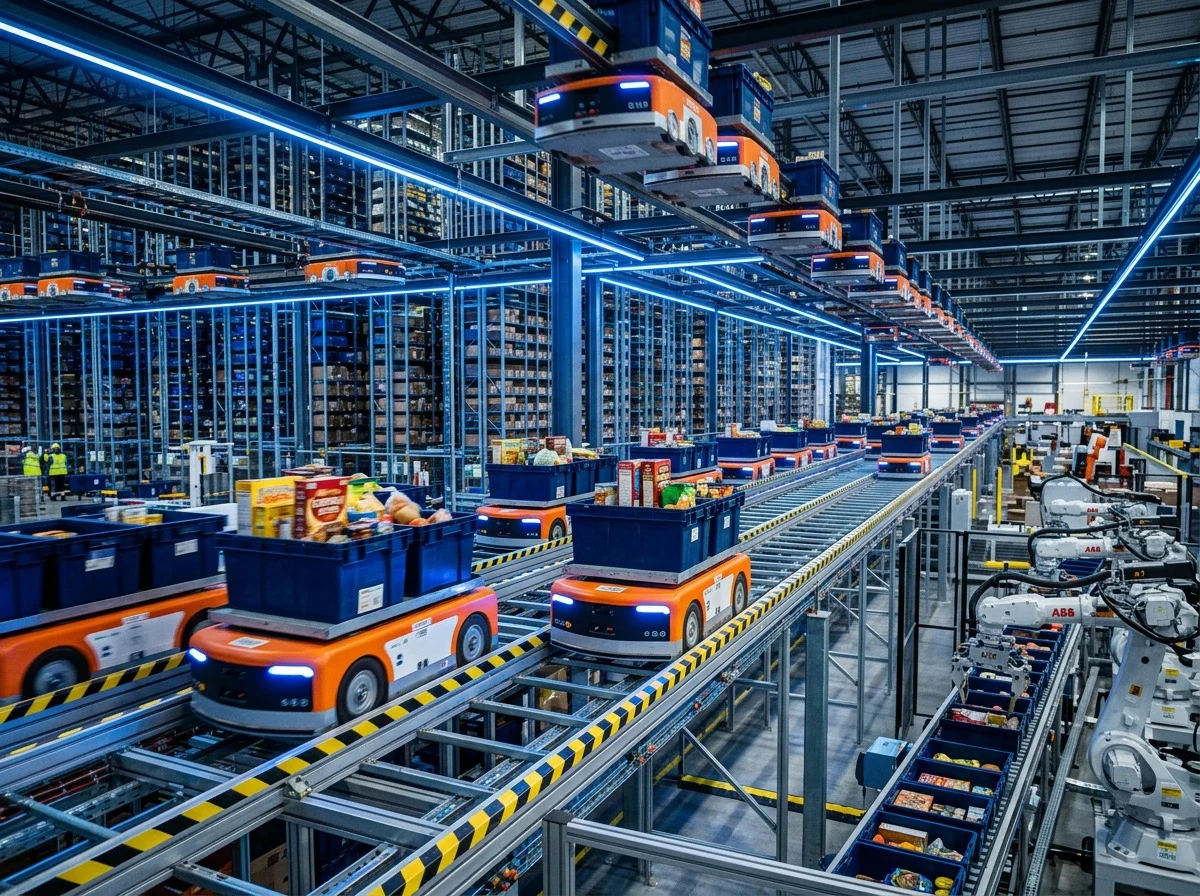
The 2018 Kroger-Ocado partnership centered on building centralized, highly automated Customer Fulfillment Centers (CFCs). These facilities featured the “hive” of robots picking groceries with the promise of faster, more efficient e-commerce at scale.
The Ocado system uses a cube-style grid where thousands of bins are stacked vertically. Robots zoom across the top of this grid, grabbing bins and delivering them to human packers at pick stations. It’s a marvel of engineering designed for density and throughput.
Where Kroger Built Its Robot Warehouses
Kroger rolled out key CFC locations across the country, with major facilities in Pleasant Prairie (Wisconsin), Frederick (Maryland), and Groveland (Florida) — the three sites now being closed. Five other automated facilities remain in operation after Kroger’s strategic review.
Why Kroger Is Shutting Down Robot Fulfillment Centers
A $2.6 Billion Write-Down That Changed the Story
The impairment and related charges of about $2.6 billion in Kroger’s Q3 2025 tied to the closures represent one of the largest automation failures in grocery history. Ocado is receiving approximately $250 million to $350 million in compensation as Kroger scales back its automation commitment.
Economics That Didn’t Work in a Dispersed U.S. Market
Analysts point to a fundamental mismatch: capital-intensive centralized automation struggles when customer demand is geographically fragmented. The Ocado robot warehouses needed dense, predictable order volume to justify their massive upfront investment, but many Kroger markets are spread out with volatile demand patterns.
Last-mile delivery costs from distant warehouses ate into margins. Utilization rates fell short of targets. Payback periods stretched beyond what the business could support — especially when lighter models like store-based picking, microfulfillment, and third-party delivery partnerships offered faster, more flexible alternatives.
Operational and Execution Challenges
Ramp-up time for these mega-facilities proved longer than expected. Network design and delivery-speed expectations were difficult to meet compared to local store-based fulfillment models. Kroger initiated site-by-site performance reviews in 2025 before making the difficult decision to close underperforming centers.
What Kroger Is Doing Instead of Betting Everything on Robots
Pivot to a Hybrid E-Commerce Model
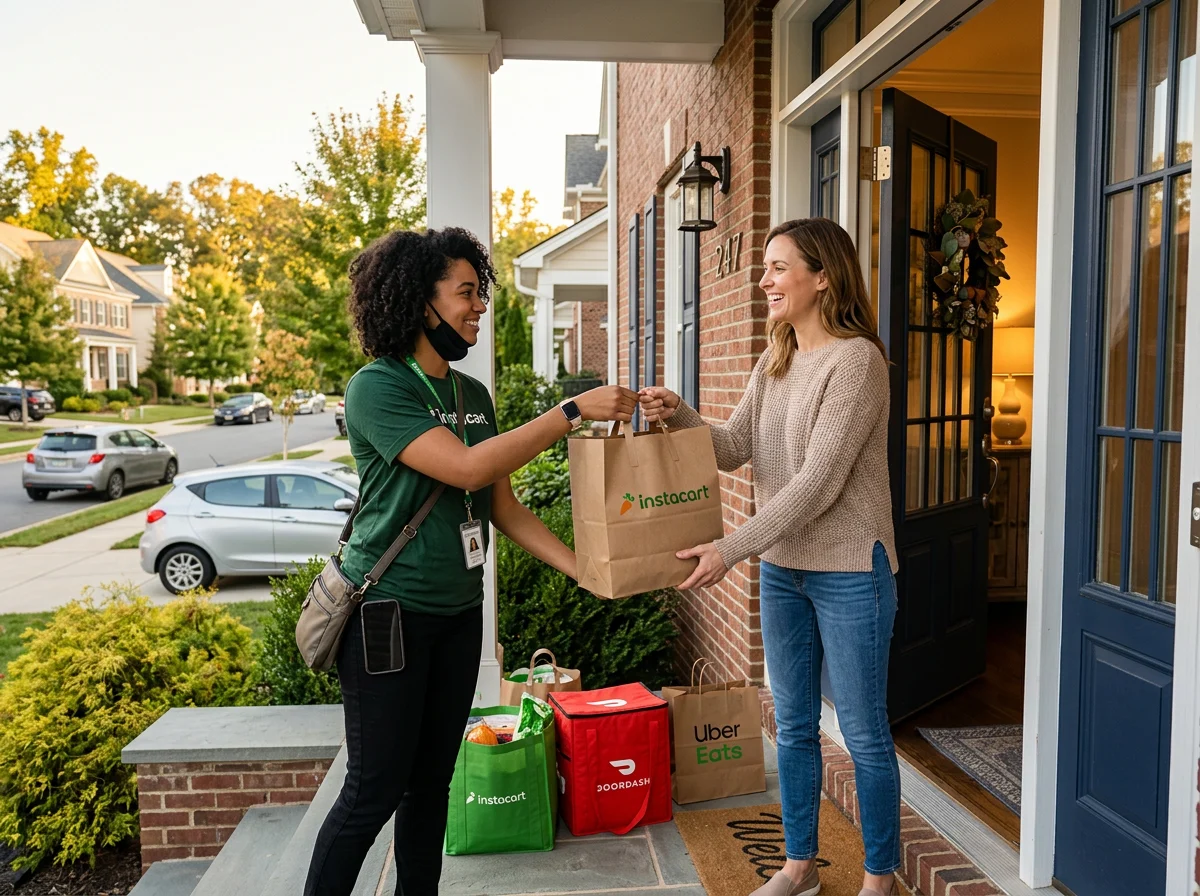
Kroger now emphasizes integrating stores, selective CFCs where they make economic sense, and expanded delivery partnerships for maximum flexibility. The company expects higher e-commerce operating profit of around $400 million in 2026 as it pivots to this hybrid approach.
Growing Partnerships With Instacart, DoorDash, and Uber Eats
Kroger has deepened collaborations with Instacart, DoorDash, and Uber Eats, including AI tools like Instacart’s Cart Assistant and new features on the Uber Eats Marketplace. These third-party platforms help Kroger offload last-mile complexity while keeping shoppers in its ecosystem — without the capital risk of giant robot warehouses.
What Happens to Ocado Now
For Ocado, Kroger’s retreat is a major blow. Market analysts have called this “another dire sign” for Ocado’s large CFC model, echoing similar challenges at other retailers like Morrisons and Waitrose that have tried centralized robotic fulfillment.
Lessons for Grocery Delivery and Retail Automation
When Centralized Robot Warehouses Make Sense
The Ocado-style model can still work under specific conditions: high-density markets, very high order volumes, and long-term capital tolerance. Overseas examples in the U.K. show where centralized automation has a stronger business case with denser populations and online-first shopping habits.
Why Many Retailers Are Choosing “Lighter” Automation
The industry is shifting toward microfulfillment, in-store picking, and flexible robotics that can be deployed incrementally. These systems can be placed closer to customers, reducing last-mile costs and allowing retailers to match automation investments to actual local demand.
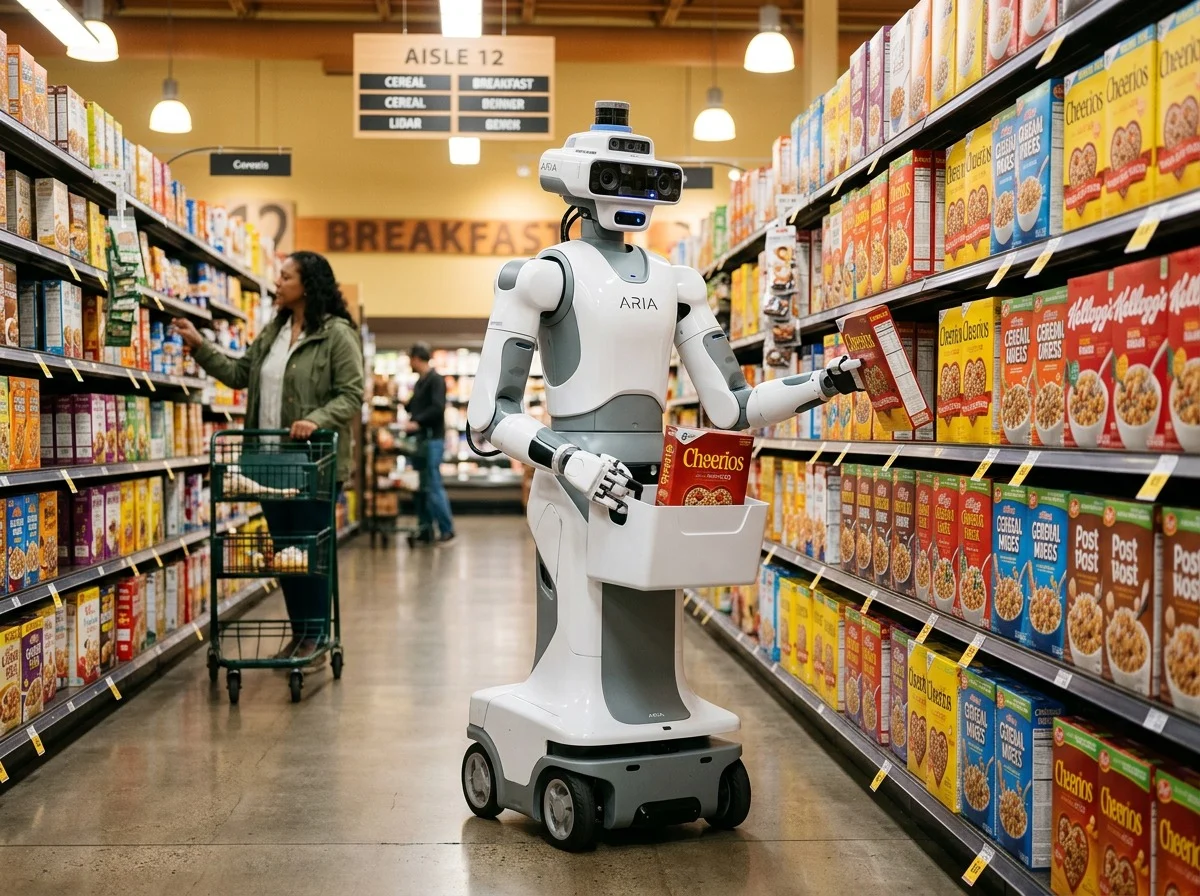
Upright robots and autonomous mobile robots (AMRs) that operate inside or behind existing stores represent a fundamentally different approach — one that might have served Kroger better than betting billions on remote mega-warehouses.
What This Means for the Future of Grocery Delivery
This pivot will likely influence competitors. Amazon’s mix of stores plus delivery, regional chains’ automation strategies, and how technology vendors position their solutions will all be shaped by Kroger’s expensive lesson.
The future of grocery delivery appears to favor smaller, distributed automation combined with marketplace partnerships over centralized robot fortresses. AI-driven demand forecasting and flexible fulfillment networks will matter more than sheer automation scale.
Did Robots Really Cost Kroger $2.6 Billion?
The short answer: No. The loss reflects a misaligned strategy more than “bad robots.” Capital intensity and network design didn’t match the economics of U.S. grocery delivery.
Kroger is now repositioning for profitable e-commerce growth by:
- Keeping five automated facilities that work economically
- Closing three underperforming sites to stop the bleeding
- Expanding partnerships with proven last-mile providers
- Investing in store-centric fulfillment and smarter, incremental automation
For retailers, investors, and technology vendors, the lesson is clear: automation must match market reality, not just engineering ambition. The future belongs to companies that can adapt their fulfillment strategy market by market — not those committed to a single, capital-intensive vision.
FAQ: Kroger’s $2.6 Billion Robot Warehouse Bet
Why did Kroger’s $2.6 billion robot warehouse bet fail?
Kroger’s bet on Ocado’s robot warehouses failed because the economics never matched U.S. grocery reality. Large, capital-intensive customer fulfillment centers need dense, predictable order volume to be profitable. In many Kroger markets, demand was too spread out, last-mile delivery distances were long, and competition squeezed margins, so the automated sites struggled to hit utilization and profitability targets.
Which Kroger robot fulfillment centers are being closed?
Kroger is closing automated fulfillment centers in Pleasant Prairie, Wisconsin; Frederick, Maryland; and Groveland, Florida. These Ocado-powered facilities were identified in a site-by-site review as underperforming and will be wound down starting in early 2026.
How much is Kroger writing off for its failed robot warehouses?
Kroger expects to record about $2.6 billion in impairment and related charges tied to its underperforming automated fulfillment network. The write-down includes closing three customer fulfillment centers and reassessing the value of Ocado-linked automation assets across its network.
Is Kroger abandoning automation altogether?
Kroger is not abandoning automation. Instead, it is scaling back the large Ocado customer fulfillment center model and moving to a hybrid strategy that combines remaining automated sites, store-based fulfillment, and third-party delivery partners such as Instacart, DoorDash, and Uber Eats.
Could upright robots or AMRs have made Kroger’s automation work better?
Upright robots and autonomous mobile robots could potentially have worked better for Kroger because they can operate in or behind existing stores and be deployed incrementally. Instead of relying on a few mega-warehouses, smaller upright systems and microfulfillment setups allow grocers to match automation investments to local demand and reduce the risk of large write-downs.
How is Kroger changing its e-commerce and delivery strategy now?
Kroger is shifting to a hybrid e-commerce strategy. The company plans to keep some Ocado centers where they are profitable, rely more on in-store picking and smaller-scale automation, and expand partnerships with Instacart, DoorDash, and Uber Eats to handle last-mile delivery. This approach is expected to improve e-commerce profitability while giving Kroger more flexibility across different markets.
FAQ: Kroger’s $2.6 Billion Robot Warehouse Bet
Why did Kroger’s $2.6 billion robot warehouse bet fail?
Kroger’s bet on Ocado’s robot warehouses failed because the economics never matched U.S. grocery reality. Large, capital-intensive customer fulfillment centers need dense, predictable order volume to be profitable. In many Kroger markets, demand was too spread out, last-mile delivery distances were long, and competition squeezed margins, so the automated sites struggled to hit utilization and profitability targets.
Which Kroger robot fulfillment centers are being closed?
Kroger is closing automated fulfillment centers in Pleasant Prairie, Wisconsin; Frederick, Maryland; and Groveland, Florida. These Ocado-powered facilities were identified in a site-by-site review as underperforming and will be wound down starting in early 2026.
How much is Kroger writing off for its failed robot warehouses?
Kroger expects to record about $2.6 billion in impairment and related charges tied to its underperforming automated fulfillment network. The write-down includes closing three customer fulfillment centers and reassessing the value of Ocado-linked automation assets across its network.
Is Kroger abandoning automation altogether?
Kroger is not abandoning automation. Instead, it is scaling back the large Ocado customer fulfillment center model and moving to a hybrid strategy that combines remaining automated sites, store-based fulfillment, and third-party delivery partners such as Instacart, DoorDash, and Uber Eats.
Could upright robots or AMRs have made Kroger’s automation work better?
Upright robots and autonomous mobile robots could potentially have worked better for Kroger because they can operate in or behind existing stores and be deployed incrementally. Instead of relying on a few mega-warehouses, smaller upright systems and micro-fulfillment setups allow grocers to match automation investments to local demand and reduce the risk of large write-downs.