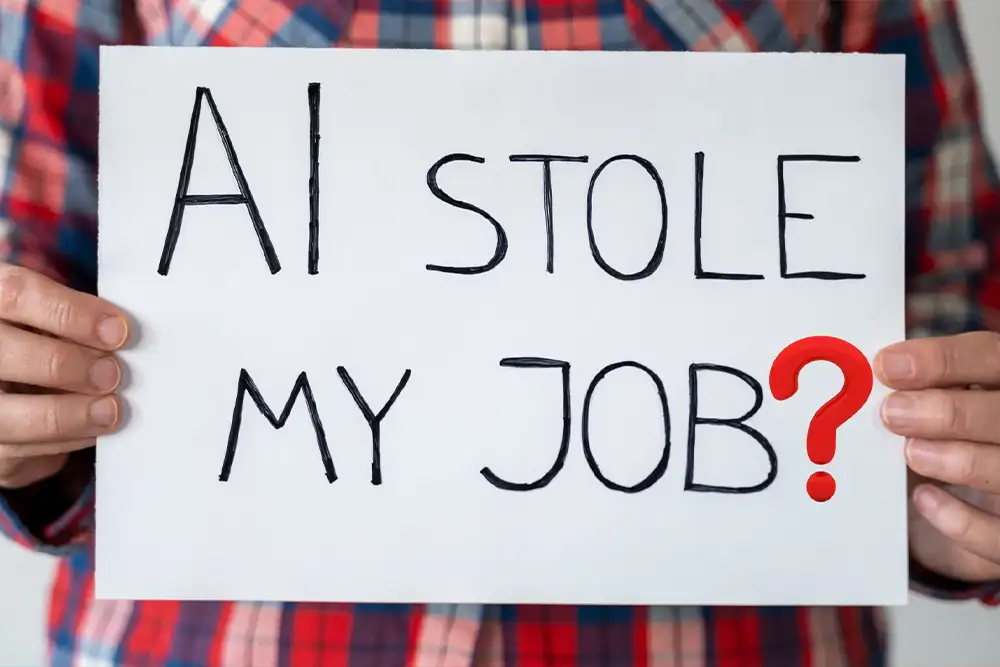
AI Revolution in the Workplace: Navigating the Future Job Market and Essential Skills
Table of Contents:
- The AI Disruption: Reshaping Industries and Jobs
- AI and Human Collaboration: The New Workplace Dynamic
- Emerging Job Opportunities in the AI Era
- Essential Skills for the AI-Driven Workforce
- Reskilling and Upskilling: Preparing for the Future
- The Socioeconomic Impact of AI on Employment
- Navigating the AI-Powered Job Market: Strategies for Success
The AI Disruption: Reshaping Industries and Jobs
The AI Revolution in the Workplace is happening at an unprecedented pace. The rapid advancement of artificial intelligence (AI) is fundamentally transforming the global job market, creating both challenges and opportunities for workers across various industries. As AI technologies continue to evolve, they are reshaping the nature of work, automating routine tasks, and augmenting human capabilities in ways previously unimaginable.
The impact of AI on employment is multifaceted and complex. While some jobs are at risk of being automated, new roles are emerging, and existing positions are being redefined.
According to a report by the World Economic Forum, by 2026, 85 million jobs may be displaced due to the shift in the division of labor between humans and machines. However, the same report predicts that 97 million new roles may emerge that are more adapted to the new division of labor between humans, machines, and algorithms.
Industries such as manufacturing, customer service, and data processing are experiencing significant disruption due to AI automation. Repetitive and routine tasks are increasingly being handled by AI-powered systems, leading to job displacement in these sectors. For instance, chatbots and virtual assistants are taking over basic customer service inquiries, while robotic process automation (RPA) is streamlining data entry and processing tasks
On the other hand, industries like healthcare, finance, and technology are witnessing the emergence of new AI-augmented roles. In healthcare, AI is being used to assist in diagnosis, drug discovery, and personalized treatment plans.
Financial institutions are leveraging AI for fraud detection, risk assessment, and algorithmic trading. The technology sector itself is experiencing a surge in demand for AI specialists, data scientists, and machine learning engineers
As AI continues to advance, it’s crucial for workers and organizations to adapt to this changing landscape. The key lies in understanding how AI can complement human skills rather than replace them entirely. By focusing on developing skills that are uniquely human – such as creativity, critical thinking, emotional intelligence, and complex problem-solving – workers can position themselves to thrive in the AI-driven job market of the future. Understanding and embracing the AI Revolution in the Workplace is essential for long-term career success in 2026 and beyond.