


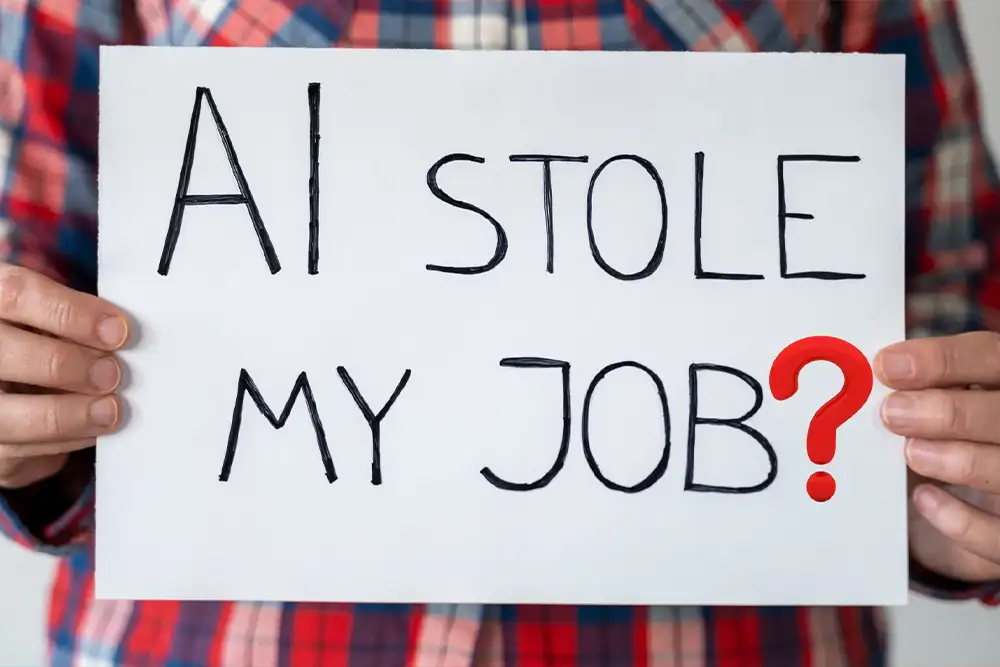
AI Revolution in the Workplace: Navigating the Future Job Market and Essential Skills
Table of Contents:
- The AI Disruption: Reshaping Industries and Jobs
- AI and Human Collaboration: The New Workplace Dynamic
- Emerging Job Opportunities in the AI Era
- Essential Skills for the AI-Driven Workforce
- Reskilling and Upskilling: Preparing for the Future
- The Socioeconomic Impact of AI on Employment
- Navigating the AI-Powered Job Market: Strategies for Success
The AI Disruption: Reshaping Industries and Jobs
The AI Revolution in the Workplace is happening at an unprecedented pace. The rapid advancement of artificial intelligence (AI) is fundamentally transforming the global job market, creating both challenges and opportunities for workers across various industries. As AI technologies continue to evolve, they are reshaping the nature of work, automating routine tasks, and augmenting human capabilities in ways previously unimaginable.
The impact of AI on employment is multifaceted and complex. While some jobs are at risk of being automated, new roles are emerging, and existing positions are being redefined.
According to a report by the World Economic Forum, by 2026, 85 million jobs may be displaced due to the shift in the division of labor between humans and machines. However, the same report predicts that 97 million new roles may emerge that are more adapted to the new division of labor between humans, machines, and algorithms.
Industries such as manufacturing, customer service, and data processing are experiencing significant disruption due to AI automation. Repetitive and routine tasks are increasingly being handled by AI-powered systems, leading to job displacement in these sectors. For instance, chatbots and virtual assistants are taking over basic customer service inquiries, while robotic process automation (RPA) is streamlining data entry and processing tasks
On the other hand, industries like healthcare, finance, and technology are witnessing the emergence of new AI-augmented roles. In healthcare, AI is being used to assist in diagnosis, drug discovery, and personalized treatment plans.
Financial institutions are leveraging AI for fraud detection, risk assessment, and algorithmic trading. The technology sector itself is experiencing a surge in demand for AI specialists, data scientists, and machine learning engineers
As AI continues to advance, it’s crucial for workers and organizations to adapt to this changing landscape. The key lies in understanding how AI can complement human skills rather than replace them entirely. By focusing on developing skills that are uniquely human – such as creativity, critical thinking, emotional intelligence, and complex problem-solving – workers can position themselves to thrive in the AI-driven job market of the future. Understanding and embracing the AI Revolution in the Workplace is essential for long-term career success in 2026 and beyond.
AI and Human Collaboration: The New Workplace Dynamic
As artificial intelligence (AI) continues to reshape the job market, a new paradigm is emerging: the collaboration between humans and AI. This synergy is creating a workplace dynamic that leverages the strengths of both human intelligence and machine learning capabilities. Understanding and adapting to this new reality is crucial for workers and organizations aiming to thrive in the AI era
The concept of AI-human collaboration is based on the idea that AI can augment human capabilities rather than simply replace them. In this model, AI takes on tasks that it excels at – such as processing vast amounts of data, identifying patterns, and performing repetitive operations – while humans focus on areas where they have a comparative advantage, including creative thinking, emotional intelligence, and complex decision-making.
This collaborative approach is already transforming various industries:
- Healthcare: AI algorithms assist doctors in analyzing medical images and patient data, leading to more accurate diagnoses and personalized treatment plans. However, the final decisions and patient interactions remain in the hands of human healthcare professionals.
- Finance: AI-powered systems help financial analysts process market data and identify investment opportunities, but human experts are still essential for interpreting results and making strategic decisions.
- Customer Service: While chatbots handle routine inquiries, human agents focus on complex issues that require empathy and nuanced communication.
- Creative Industries: AI tools assist in generating ideas and streamlining production processes, but human creativity remains central to producing unique and emotionally resonant content.
The key to successful AI-human collaboration lies in developing a workforce that can effectively work alongside AI systems. This requires a shift in mindset and skill set. Workers need to understand AI’s capabilities and limitations, learn how to interact with AI tools, and focus on developing skills that complement AI rather than compete with it.
Organizations play a crucial role in fostering this collaboration. They need to:
- Invest in AI literacy programs for employees
- Redesign workflows to integrate AI seamlessly
- Encourage a culture of continuous learning and adaptation
- Emphasize the development of uniquely human skills
As AI continues to evolve, the nature of this collaboration will likely change. Future AI systems may become more advanced in areas currently dominated by humans, such as creative tasks or emotional intelligence. This ongoing evolution underscores the importance of remaining adaptable and continuously updating skills.
The AI-human collaboration model offers a promising vision for the future of work. By embracing this approach, workers can enhance their productivity and job security, while organizations can achieve higher levels of innovation and efficiency. As we move forward, the most successful individuals and companies will be those that can effectively harness the power of AI while leveraging uniquely human capabilities.
Emerging Job Opportunities in the AI Era
As artificial intelligence (AI) continues to reshape the job market, it’s not just eliminating roles – it’s also creating a wealth of new opportunities. Understanding these emerging job prospects is crucial for individuals looking to future-proof their careers and for organizations aiming to stay competitive in the AI-driven economy.
- AI and Machine Learning Specialists:
The demand for professionals who can develop, implement, and maintain AI systems is skyrocketing. Roles such as AI engineers, machine learning specialists, and deep learning researchers are becoming increasingly valuable across various industries - Data Scientists and Analysts:
As AI relies heavily on data, the need for professionals who can collect, process, and interpret large datasets is growing. Data scientists and analysts play a crucial role in turning raw data into actionable insights that drive AI-powered decision-making - AI Ethics and Governance Specialists:
With the increasing influence of AI on society, there’s a growing need for experts who can address the ethical implications of AI and develop governance frameworks. These professionals ensure that AI systems are developed and deployed responsibly and in compliance with regulations. - Human-AI Interaction Designers:
As AI becomes more integrated into our daily lives and work environments, there’s a need for specialists who can design intuitive and effective interfaces between humans and AI systems. This role combines elements of UX design, psychology, and AI understanding. - AI Trainers and Explainers:
These professionals bridge the gap between complex AI systems and end-users. They train AI models, interpret AI outputs, and explain AI decisions to non-technical stakeholders. - Robotics Engineers and Technicians:
With the increasing use of AI-powered robots in manufacturing, healthcare, and other industries, there’s a growing demand for professionals who can design, build, and maintain these systems. - AI-Assisted Healthcare Professionals:
In the medical field, roles are emerging that combine healthcare expertise with AI knowledge. These professionals use AI tools for diagnosis, treatment planning, and patient care optimization. - AI in Creative Industries:
New roles are emerging in fields like digital art, music production, and content creation, where professionals use AI tools to enhance their creative output - AI Business Strategists:
These professionals help organizations integrate AI into their business models, identifying opportunities for AI implementation and developing strategies to leverage AI for competitive advantage. - Cybersecurity Specialists with AI Expertise:
As AI systems become more prevalent, there’s an increasing need for cybersecurity professionals who understand the unique vulnerabilities and protection requirements of AI systems.
These emerging roles highlight the transformative impact of AI on the job market. They also underscore the importance of developing a diverse skill set that combines technical knowledge with domain expertise and soft skills.
To prepare for these opportunities, individuals should:
- Stay informed about AI developments and their impact on various industries.
- Invest in continuous learning, focusing on both technical and soft skills.
- Seek opportunities to work on AI-related projects, even if it’s not their primary role
- Develop a multidisciplinary approach, combining AI knowledge with expertise in specific domains.
Organizations, on the other hand, should:
- Invest in reskilling and upskilling programs to prepare their workforce for AI-related roles.
- Foster a culture of innovation and experimentation with AI technologies. Collaborate with educational institutions to develop curricula that align with emerging AI job requirements.
- Create cross-functional teams that combine AI expertise with domain knowledge
As AI continues to evolve, we can expect even more novel job roles to emerge. The key to thriving in this dynamic environment is to remain adaptable, embrace lifelong learning, and focus on developing skills that complement AI rather than compete with it. By doing so, individuals and organizations can position themselves to capitalize on the exciting opportunities that the AI era presents.
AI Revolution in the Workplace: Essential Skills for the AI-Driven Workforce
As artificial intelligence (AI) continues to reshape the job market, the skills required to thrive in the workplace are evolving rapidly. To remain competitive and relevant in the AI-driven economy, workers need to focus on developing a combination of technical, cognitive, and social skills that complement AI capabilities
- Technical Skills:
While not everyone needs to become an AI expert, having a basic understanding of AI and its applications is becoming increasingly important across various industries.
- AI Literacy: Understanding the basics of AI, machine learning, and data science
- Programming: Familiarity with languages like Python, R, or SQL
- Data Analysis: Ability to interpret and draw insights from data
- Cloud Computing: Knowledge of cloud platforms and their AI services
- Cognitive Skills:
As AI takes over routine and repetitive tasks, human workers need to focus on skills that machines currently struggle with:
- Critical Thinking: Ability to analyze complex situations and make reasoned judgments
- Creativity: Generating original ideas and innovative solutions
- Problem-Solving: Tackling complex, multifaceted problems that require human insight
- Adaptability: Quickly learning new skills and adjusting to changing circumstances
- Social and Emotional Skills:
These uniquely human skills are becoming increasingly valuable in an AI-driven workplace
- Emotional Intelligence: Understanding and managing emotions in oneself and others
- Communication: Clearly conveying complex ideas and collaborating effectively
- Leadership: Guiding teams and organizations through AI-driven transformations
- Cultural Intelligence: Working effectively across diverse cultural contexts
- Interdisciplinary Knowledge:
As AI blurs the lines between different fields, the ability to connect ideas across disciplines becomes crucial:
- Systems Thinking: Understanding how different parts of a system interact
- Ethical Reasoning: Considering the moral implications of AI applications
- Domain Expertise: Deep knowledge in specific fields to guide AI applications
- AI-Human Collaboration:
The ability to work effectively alongside AI systems is becoming a key skill:
- AI Interaction: Knowing how to effectively use AI tools and interpret their outputs
- Task Decomposition: Breaking down complex tasks into components that can be handled by AI or humans
- AI Oversight: Understanding when to trust AI outputs and when human judgment is needed
- Continuous Learning:
Given the rapid pace of AI advancement, the ability to continuously update one’s skills is crucial:
- Self-Directed Learning: Taking initiative to learn new skills and technologies
- Digital Literacy: Staying updated with the latest digital tools and platforms
- Curiosity: Maintaining a keen interest in emerging technologies and their applications
- Business and Strategy Skills:
Understanding how AI can be leveraged for business value is becoming increasingly important:
- AI Strategy: Identifying opportunities for AI implementation in business processes
- Project Management: Managing AI projects from conception to deployment
- Change Management: Guiding organizations through AI-driven transformations
To develop these skills, individuals can:
- Enroll in online courses or bootcamps focused on AI and related technologies
- Seek out projects or roles that involve working with AI systems
- Practice problem-solving and creative thinking through various challenges and exercises
- Engage in cross-functional teams to develop interdisciplinary knowledge
- Cultivate emotional intelligence through mindfulness practices and interpersonal exercises
- Stay updated with the latest AI developments through industry publications and conferences
Organizations can support skill development by:
- Offering training programs and workshops on AI and related skills
- Creating mentorship programs that pair AI experts with other employees
- Encouraging cross-functional collaboration to foster interdisciplinary thinking
- Providing opportunities for employees to work on AI-related projects
- Cultivating a culture of continuous learning and adaptation
As AI continues to evolve, the specific skills needed may change. However, the fundamental ability to adapt, learn, and work alongside AI systems will remain crucial. By focusing on developing these essential skills, workers can position themselves to thrive in the AI-driven workforce of the future.
Reskilling and Upskilling: Preparing for the Future
As artificial intelligence (AI) continues to transform the job market, the need for reskilling and upskilling has become more critical than ever. This ongoing process of learning and adaptation is essential for workers to remain relevant and competitive in the AI-driven economy.
Reskilling involves learning new skills to transition into a different role or industry, while upskilling focuses on enhancing existing skills to advance within one’s current field. Both are crucial strategies for navigating the changing job landscape shaped by AI
The importance of reskilling and upskilling is underscored by several factors:
- Rapid Technological Change: AI and related technologies are evolving at an unprecedented pace, making continuous learning essential to keep up with industry demands.
- Job Displacement: As AI automates certain tasks, some roles may become obsolete, necessitating workers to acquire new skills for emerging positions.
- Changing Skill Requirements: Even within existing roles, the skills required are evolving as AI is integrated into various processes.
- Increased Competitiveness: As AI takes over routine tasks, human workers need to focus on developing skills that complement AI capabilities to remain valuable in the job market.
Strategies for Effective Reskilling and Upskilling:
- Identify Future-Proof Skills:
Focus on developing skills that are likely to remain in demand despite AI advancements. These often include:
- Complex problem-solving
- Critical thinking
- Creativity
- Emotional intelligence
- AI literacy
- Data analysis
- Interdisciplinary knowledge
- Leverage Online Learning Platforms:
Take advantage of Massive Open Online Courses (MOOCs) and other online learning resources. Platforms like Coursera, edX, and Udacity offer courses in AI, data science, and other relevant fields. - Pursue Professional Certifications:
Many technology companies and professional organizations offer certifications in AI-related fields. These can provide credible validation of your skills to potential employers. - Engage in Project-Based Learning:
Participate in real-world projects or hackathons that involve AI technologies. This hands-on experience can be invaluable in developing practical skills. - Seek Internal Opportunities:
Look for opportunities within your current organization to work on AI-related projects or transition into roles that involve AI. - Develop a Growth Mindset:
Cultivate a mindset that embraces challenges and views failures as learning opportunities. This resilience is crucial in the face of rapid technological change. - Network and Stay Informed:
Attend industry conferences, join professional associations, and engage with online communities to stay updated on the latest AI developments and skill requirements.
The Role of Organizations in Reskilling and Upskilling:
Organizations play a crucial role in facilitating the reskilling and upskilling of their workforce:
- Invest in Training Programs:
Develop comprehensive training programs that help employees acquire AI-related skills relevant to their roles. - Create a Culture of Continuous Learning:
Foster an environment that encourages and rewards ongoing skill development. - Provide Time for Learning:
Allocate dedicated time for employees to engage in learning activities during work hours. - Offer Mentorship Programs:
Pair experienced AI professionals with other employees to facilitate knowledge transfer. - Collaborate with Educational Institutions:
Partner with universities and training providers to develop curricula that align with industry needs.
Implement Job Rotation Programs:
Allow employees to experience different roles and gain diverse skills within the organization.
- Provide Clear Career Pathways:
Outline potential career progression routes that incorporate AI skills, giving employees a clear vision of how upskilling can benefit their career within the organization. - Leverage AI for Personalized Learning:
Use AI-powered learning platforms that can tailor training content to individual employee needs and learning styles.
Challenges in Reskilling and Upskilling: While the benefits of reskilling and upskilling are clear, there are several challenges that individuals and organizations may face:
- Time Constraints:
Many workers struggle to find time for learning alongside their regular job responsibilities. - Financial Barriers:
The cost of courses, certifications, and training programs can be prohibitive for some individuals and smaller organizations. - Rapidly Changing Skill Requirements:
The fast pace of AI development can make it challenging to determine which skills will be most valuable in the long term. - Resistance to Change:
Some employees may be reluctant to embrace new technologies or learn new skills, especially if they’ve been in their current role for a long time. - Lack of Clear Learning Pathways:
With the multitude of learning options available, it can be difficult to determine the most effective learning path for specific career goals.
Overcoming these challenges requires a concerted effort from individuals, organizations, and policymakers:
- Individuals should prioritize continuous learning as a core part of their career development, setting aside dedicated time for skill acquisition.
- Organizations need to view reskilling and upskilling as a strategic investment rather than a cost, allocating resources accordingly.
- Governments and educational institutions can play a role by providing subsidies or grants for reskilling programs and developing curricula that align with future skill needs.
- Industry partnerships can help create more relevant and practical training programs that directly address market needs.
The Future of Reskilling and Upskilling: As AI continues to evolve, the nature of reskilling and upskilling will likely change as well. We may see:
- More Personalized Learning:
AI-powered adaptive learning systems will provide highly tailored learning experiences based on individual needs and learning styles. - Virtual and Augmented Reality Training:
Immersive technologies will enable more engaging and effective skill development, particularly for hands-on tasks. - Micro-Learning and Nano-Degrees:
Short, focused learning modules that can be completed quickly and combined for comprehensive skill development. - Continuous Skill Assessment:
AI-driven systems that constantly evaluate an individual’s skills and suggest relevant learning opportunities. - Integration of Learning and Work:
Learning will become more seamlessly integrated into daily work activities, blurring the line between training and job performance.
In conclusion, reskilling and upskilling are not just temporary responses to the AI revolution – they are becoming fundamental aspects of career development in the 21st century. By embracing a mindset of lifelong learning and adapting to the changing skill requirements, individuals can position themselves to thrive in the AI-driven job market. Organizations that prioritize and facilitate this continuous learning process will be better equipped to navigate the challenges and opportunities presented by AI, ensuring their workforce remains competitive and innovative in the face of rapid technological change.
The Socioeconomic Impact of AI on Employment
The integration of artificial intelligence (AI) into the workforce is not just a technological shift; it’s a socioeconomic transformation that is reshaping the very fabric of our society. Understanding the broader implications of this change is crucial for policymakers, business leaders, and individuals alike.
Economic Impact:
- Job Displacement and Creation:
While AI is expected to automate many jobs, it’s also creating new roles. A report by the World Economic Forum predicts that by 2026, 85 million jobs may be displaced by the shift in labor division between humans and machines, while 97 million new roles may emerge. This net positive job creation, however, doesn’t negate the significant disruption to the labor market. - Productivity Gains:
AI has the potential to significantly boost productivity across various sectors. For instance, in manufacturing, AI-powered robots can work 24/7 without fatigue, potentially increasing output. In knowledge-based industries, AI can automate routine tasks, allowing workers to focus on higher-value activities. - Economic Inequality:
There’s a risk that AI could exacerbate economic inequality. Those with the skills to work with AI may see their incomes rise, while those in automated jobs may face unemployment or wage stagnation. This “skill-biased technological change” could widen the gap between high-skilled and low-skilled workers. - Industry Disruption:
AI is reshaping entire industries. For example, the rise of autonomous vehicles could disrupt transportation and logistics, while AI-powered diagnostic tools are transforming healthcare. These changes can lead to the decline of some industries and the rapid growth of others.
Social Impact:
- Education and Skills:
The AI revolution is highlighting the need for education systems to adapt. There’s an increasing emphasis on STEM education, critical thinking, and creativity – skills that complement rather than compete with AI. - Work-Life Balance:
AI automation could potentially lead to reduced working hours, allowing for better work-life balance. However, it could also blur the lines between work and personal time as AI systems enable 24/7 productivity. - Job Satisfaction and Mental Health:
As AI takes over routine tasks, human workers may find their roles becoming more creative and strategic, potentially increasing job satisfaction. However, the pressure to continuously upskill and adapt to AI could also lead to increased stress and anxiety. - Social Mobility:
AI could either enhance or hinder social mobility. On one hand, AI-powered educational tools could democratize access to high-quality education. On the other, if access to AI skills becomes a key determinant of economic success, it could create new barriers to social mobility. - Demographic Shifts:
AI could impact different demographic groups differently. For instance, older workers might find it more challenging to adapt to AI technologies, potentially leading to increased early retirement. This could have implications for pension systems and healthcare.
Policy Implications:
- Education and Training:
Governments need to invest in education and training programs that prepare the workforce for the AI era. This includes both reskilling programs for displaced workers and updating school curricula to include AI literacy. - Social Safety Nets:
As job displacement due to AI may lead to periods of unemployment for many workers, robust social safety nets and unemployment benefits will be crucial. - AI Governance:
Policymakers need to develop frameworks for the ethical development and deployment of AI, addressing issues like bias in AI systems and the impact of AI on privacy. - Labor Laws:
As AI changes the nature of work, labor laws may need to be updated to protect workers’ rights in the new AI-driven workplace. - Economic Policies:
Governments may need to consider policies to address potential increases in economic inequality, such as universal basic income or progressive taxation of AI-driven profits.
Ethical Considerations:
- Algorithmic Bias:
AI systems can perpetuate and amplify existing biases in hiring, lending, and other areas if not carefully designed and monitored. - Privacy Concerns:
The increasing use of AI in the workplace raises questions about employee privacy and data protection. - Human Value:
As AI becomes more capable, there’s a philosophical question about the value and dignity of human work. Ensuring that AI augments rather than replaces human capabilities will be a key ethical challenge. - Global Impact: The impact of AI on employment will not be uniform across the globe.
Developed countries with aging populations might welcome AI as a solution to labor shortages, while developing countries with young, growing populations might face challenges in creating enough jobs.
Moreover, countries and regions that lead in AI development and adoption may gain significant economic advantages, potentially reshaping global economic power dynamics.
In conclusion, the socioeconomic impact of AI on employment is profound and multifaceted. While AI promises significant economic benefits through increased productivity and innovation, it also poses challenges in terms of job displacement and potential increases in inequality.
Navigating this transformation will require thoughtful policies, adaptive education systems, and a commitment to ensuring that the benefits of AI are broadly shared across society. As we move forward, it will be crucial to harness the potential of AI while mitigating its risks, ensuring that technological progress translates into social progress for all.
Navigating the AI-Powered Job Market: Strategies for Success
As artificial intelligence (AI) continues to reshape the job market, individuals need to adopt new strategies to navigate this evolving landscape successfully. Here are key approaches to thrive in the AI-powered job market:
- Embrace Lifelong Learning:
In the rapidly changing AI landscape, continuous learning is no longer optional – it’s essential.
- Stay updated with the latest AI developments in your field
- Regularly assess your skills and identify areas for improvement
- Engage in online courses, workshops, and certifications related to AI and your industry
- Cultivate a growth mindset that views challenges as opportunities for learning
- Develop a T-Shaped Skill Set:
Combine depth in a specific area with breadth across multiple domains.
- Cultivate expertise in your primary field
- Develop a working knowledge of AI and its applications in your industry
- Acquire complementary skills that enhance your primary expertise (e.g., data analysis for marketers)
- Focus on Human-AI Collaboration:
Rather than competing with AI, focus on how you can work alongside it effectively.
- Understand the capabilities and limitations of AI in your field
- Identify tasks where human judgment complements AI analysis
- Develop skills in interpreting and acting on AI-generated insights
- Emphasize Uniquely Human Skills:
Cultivate skills that AI currently struggles to replicate.
- Emotional intelligence and empathy
- Creative problem-solving and innovation
- Complex communication and negotiation
- Ethical decision-making and leadership
- Stay Adaptable and Flexible:
The job market is likely to remain dynamic as AI continues to evolve.
- Be open to changing roles or industries
- Develop a diverse skill set that can be applied across different contexts
- Embrace project-based work and the gig economy as potential career paths
- Build a Strong Professional Network:
Networking remains crucial in the AI era, perhaps even more so.
- Attend industry conferences and AI-focused events
- Engage in online professional communities and forums
- Seek mentorship from individuals experienced in AI integration
- Develop AI Literacy:
While not everyone needs to become an AI expert, a basic understanding is increasingly valuable.
- Learn the fundamentals of AI, machine learning, and data science
- Understand how AI is applied in your industry
- Stay informed about ethical considerations and potential biases in AI systems
- Leverage AI in Your Job Search:
Use AI-powered tools to enhance your job search process.
- Utilize AI-driven job matching platforms
- Use AI writing assistants to refine your resume and cover letters
- Prepare for AI-powered initial screening interviews
- Cultivate a Personal Brand:
In a job market where AI might be screening initial applications, a strong personal brand can help you stand out.
- Develop a compelling online presence (LinkedIn, personal website, etc.)
- Share insights and thought leadership in your field
- Showcase projects that demonstrate your skills, especially those involving AI
- Seek Out AI-Adjacent Roles:
Look for opportunities in roles that support or complement AI initiatives.
- AI project management
- AI ethics and governance
- Data quality and preparation for AI systems
- User experience design for AI-powered products
- Understand the Business Impact of AI:
Develop the ability to see how AI can create value in business contexts.
- Learn about AI strategy and implementation
- Understand the ROI of AI projects
- Develop skills in change management for AI integration
- Prepare for Remote and Distributed Work:
AI is enabling more flexible work arrangements.
- Develop strong digital collaboration skills
- Learn to manage your time and productivity in remote settings
- Cultivate a home office setup that supports effective remote work
- Stay Informed About AI Regulations:
As AI becomes more prevalent, understanding related laws and regulations will be valuable.
- Keep abreast of AI-related legislation in your industry
- Understand data privacy laws and their implications for AI use
- Learn about ethical guidelines for AI development and deployment
- Develop Cross-Cultural Competence:
AI is enabling more global collaboration, making cross-cultural skills increasingly important.
- Learn about different cultural approaches to AI adoption
- Develop skills in cross-cultural communication
- Understand global perspectives on AI ethics and use
- Practice Resilience and Well-being:
Navigating the rapidly changing AI job market can be stressful.
- Develop stress management techniques
- Cultivate a support network of peers facing similar challenges
- Prioritize mental and physical well-being
By adopting these strategies, individuals can position themselves to thrive in the AI-powered job market. Remember, the key is not to compete with AI, but to develop a unique blend of technical knowledge, human skills, and adaptability that allows you to work effectively alongside AI systems.
As you navigate this new landscape, it’s important to stay curious, remain open to new opportunities, and continually reassess your skills and career path.
The AI revolution in the workplace is not just changing the jobs we do, but how we approach our careers. By embracing these changes and proactively developing your skills, you can turn the challenges posed by AI into opportunities for growth and success in your professional life.